

How Spain became the preferred laboratory for multinationals—and why this leadership does not yet translate into industrial power.
By Ehab Soltan
HoyLunes – Europe is undergoing a silent redefinition of its pharmaceutical ecosystem. The regulatory reform driven by the European Commission, the progressive application of the European Health Technology Assessment (HTA) Regulation, and the consolidation of the scientific role of the European Medicines Agency (EMA) are altering the balance between clinical research, industrial production, and access to medicines. In this context, Spain has achieved something unexpected: becoming one of the most dynamic centers for clinical research in Europe without having yet consolidated an equivalent position in pharmaceutical production or intellectual property.
The phenomenon raises a strategic question for the future of the European biomedical ecosystem: Is Spain the continent’s new clinical hub or simply the testing ground for global pharmaceutical innovation?

Anatomy of a Leadership: The Spanish Regulatory “Miracle”
Spanish leadership in clinical trials did not arise by chance. It was the result of a regulatory and organizational convergence rarely seen in Europe.
The turning point was Royal Decree 1090/2015, which modernized the clinical research framework in Spain and anticipated several of the principles that would later be consolidated by the EU Clinical Trials Regulation.
The system introduced three structural changes:
Regulatory centralization within the Spanish Agency of Medicines and Medical Devices (AEMPS), reducing administrative fragmentation.
Coordinated ethics committees, which allowed for the accelerated approval of multicenter studies.
Harmonized procedures aligned with European standards.
The result was a significant reduction in authorization times for clinical studies and greater regulatory predictability for the industry. According to official data from the AEMPS, Spain has consistently ranked among the European countries with the highest number of authorized clinical trials, with a particular prominence in oncology, rare diseases, and advanced therapies.
The consolidation of this model later coincided with the entry into force of the EU Clinical Trials Regulation, which created a harmonized system for the entire European Union through the Clinical Trials Information System (CTIS) portal. The Spanish adaptation was relatively seamless precisely because much of the administrative architecture had already been anticipated by the 2015 national regulatory framework. This early alignment explains why numerous international sponsors today consider Spain to be one of the most predictable regulatory environments for launching multicenter trials within the European Union.
The Invisible Infrastructure: The Hospital Advantage of the SNS
But regulation does not explain everything. The true Spanish strategic asset is its public health infrastructure.
The National Health System (SNS) provides a highly capillary hospital network that allows for rapid patient recruitment, coordination of multicenter trials, and the integration of clinical research into hospital practice. This model contrasts with more fragmented health systems where coordination between hospitals and research centers is more complex.
The consequence is an ecosystem that is particularly attractive to the pharmaceutical industry: high-quality clinical data generated in real-world care settings.
This competitive advantage now faces its litmus test with the European Health Data Space (EHDS). If Spain leads the digitalization of its clinical records under this standard, the data generated within the SNS will not only serve for trials but could also become the fuel for artificial intelligence algorithms in drug discovery, elevating the strategic value of the Spanish clinical asset.
The European Triangle of Power: Spain vs. Germany and France
Spanish clinical leadership must be analyzed in relation to the other two major pharmaceutical poles in the European Union: Germany and France.
| Criterion | Spain | Germany | France |
| Recruitment Speed | High | Medium | Low |
| Fiscal Attractiveness | High | Moderate | High |
| Industrial Focus | Clinical Trials | Chemical & Pharma Production | Biotechnology |
Germany remains the industrial giant of the European pharmaceutical sector. However, its federal structure and regional interpretations of the General Data Protection Regulation (GDPR) can slow down certain clinical research processes. France, for its part, has oriented its industrial policy
toward biotechnology and advanced therapies, relying on fiscal incentives such as the Research Tax Credit (Crédit d’Impôt Recherche).
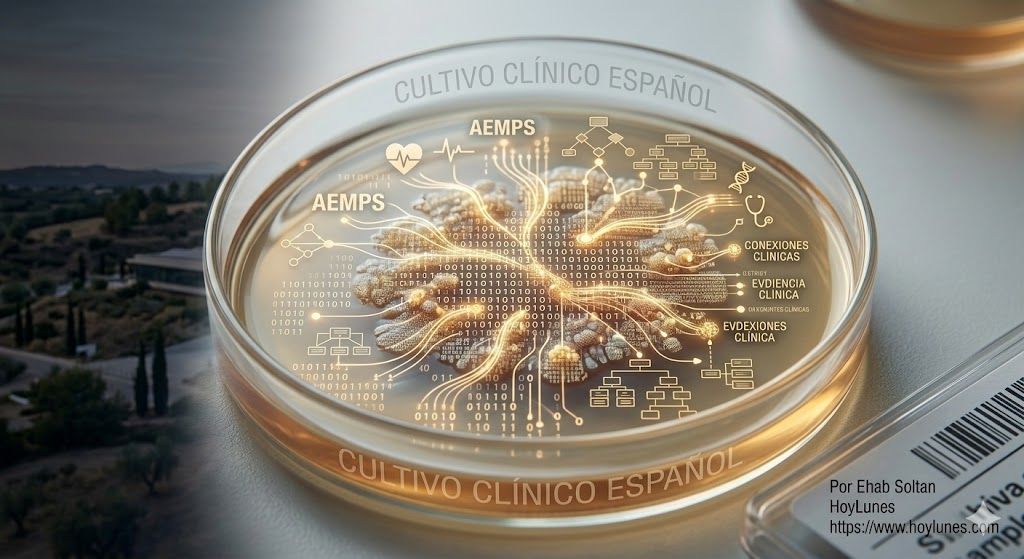
Spain occupies a different position: it does not lead in production, but it does lead in the generation of **clinical evidence**. This balance creates a strategic paradox: Germany has the industry; Spain has the data.
Opportunities and Risks for Multinationals
Spain’s clinical appeal is developing within a pharmaceutical ecosystem that already possesses significant economic weight. According to data from Farmaindustria, annual investment in pharmaceutical R&D in Spain exceeds several billion euros, placing the sector among the country’s leading private investors in research.
However, a large part of that investment is concentrated in clinical research and the development of international studies sponsored by multinationals. The strategic challenge lies in transforming that research capacity into a greater presence of decision-making centers, biotechnological platforms, and advanced industrial production.
The new European regulatory architecture could further strengthen Spain’s role in clinical research. The pharmaceutical reform promoted by the European Commission proposes regulatory incentives for companies that launch new medicines simultaneously in multiple European markets. For multinationals, this implies designing evidence-generation strategies that can support joint clinical assessments under the EU HTA Regulation.
In this context, the ability to recruit patients quickly and generate robust clinical data makes Spain a strategic partner within the European research network. The situation is especially relevant for areas such as oncological immunotherapy, next-generation vaccines, advanced therapy medicinal products (ATMPs), and cellular therapies like CAR-T cell therapy, where several Spanish hospital centers have participated in pioneering European programs within the EMA regulatory framework.
The growing scientific role of the EMA is also redefining the strategic value of national clinical ecosystems. In recent years, the agency has expanded its activity in areas such as advanced therapies, early scientific evaluation, and regulatory advice for emerging biotech platforms. In this context, countries capable of generating robust clinical evidence—especially in oncology, rare diseases, and gene therapies—acquire increasing weight in the European regulatory architecture.
The Structural Risk: Becoming a “Testing Plant”
However, the Spanish ecosystem suffers from an administrative schizophrenia: while the AEMPS accelerates trials, the pricing and reimbursement system imposes some of the longest waits in the European Union for market access.
This gap raises an uncomfortable question: How much longer will multinationals continue to invest in R&D in a country that takes nearly two years to incorporate those same innovations into its public portfolio?
Furthermore, clinical leadership does not guarantee industrial leadership. There is a clear strategic risk: that Spain consolidates as a clinical trial center without capturing a proportional share of the pharmaceutical value chain.
Trials generate scientific knowledge. But manufacturing and intellectual property generate industrial capacity, sustained investment, and strategic autonomy. The European Union has begun to address this challenge through health industrial policy initiatives, such as the PERTE for Vanguard Health, aimed at strengthening biomedical production capacity and advanced therapies. The key question is whether this political momentum will be enough to transform Spanish clinical leadership into industrial capacity.

The Strategic Thesis: Clinical Data as Geopolitical Power
Pharmaceutical innovation is becoming a geopolitical asset. The United States dominates biotechnological intellectual property. China is accelerating its manufacturing capacity. Europe is attempting to build a model based on regulation, science, and equitable access.
In that balance, Spanish leadership in clinical research could acquire a greater importance than it seems today. Clinical data are not just scientific evidence; they are strategic infrastructure.
If Spain manages to turn its advantage in clinical trials into leverage to attract manufacturing, technological development, and decision-making centers, it could consolidate itself as one of the most influential nodes in the European pharmaceutical architecture. If it fails, the country runs the risk of becoming something more modest: an efficient laboratory for innovations conceived and produced elsewhere.
The question is no longer whether Spain can lead European clinical research. That position seems consolidated. The true question
is whether the country will be able to use that scientific capital to attract corporate decision-making centers, industrial investment, and intellectual property.
In the new European pharmaceutical map, clinical data are becoming a currency of power. The next decade will determine whether Spain chooses to use them as a strategic lever or accepts continuing simply as one of the most efficient laboratories in Europe.
Sources
European Commission – Pharmaceutical Strategy for Europe. [https://health.ec.europa.eu]
European Medicines Agency. [https://www.ema.europa.eu]
Spanish Agency of Medicines and Medical Devices (AEMPS). [https://www.aemps.gob.es]
OECD – Health at a Glance. [https://www.oecd.org/health/health-at-a-glance/]
#PharmaceuticalInnovation #ClinicalRD #HealthGeopolitics #AEMPS #PharmaMultinationals #IndustrialPolicy #HoyLunes #EhabSoltan
This is for informational purposes only. For medical advice or diagnosis, consult a professional.